Shanty town
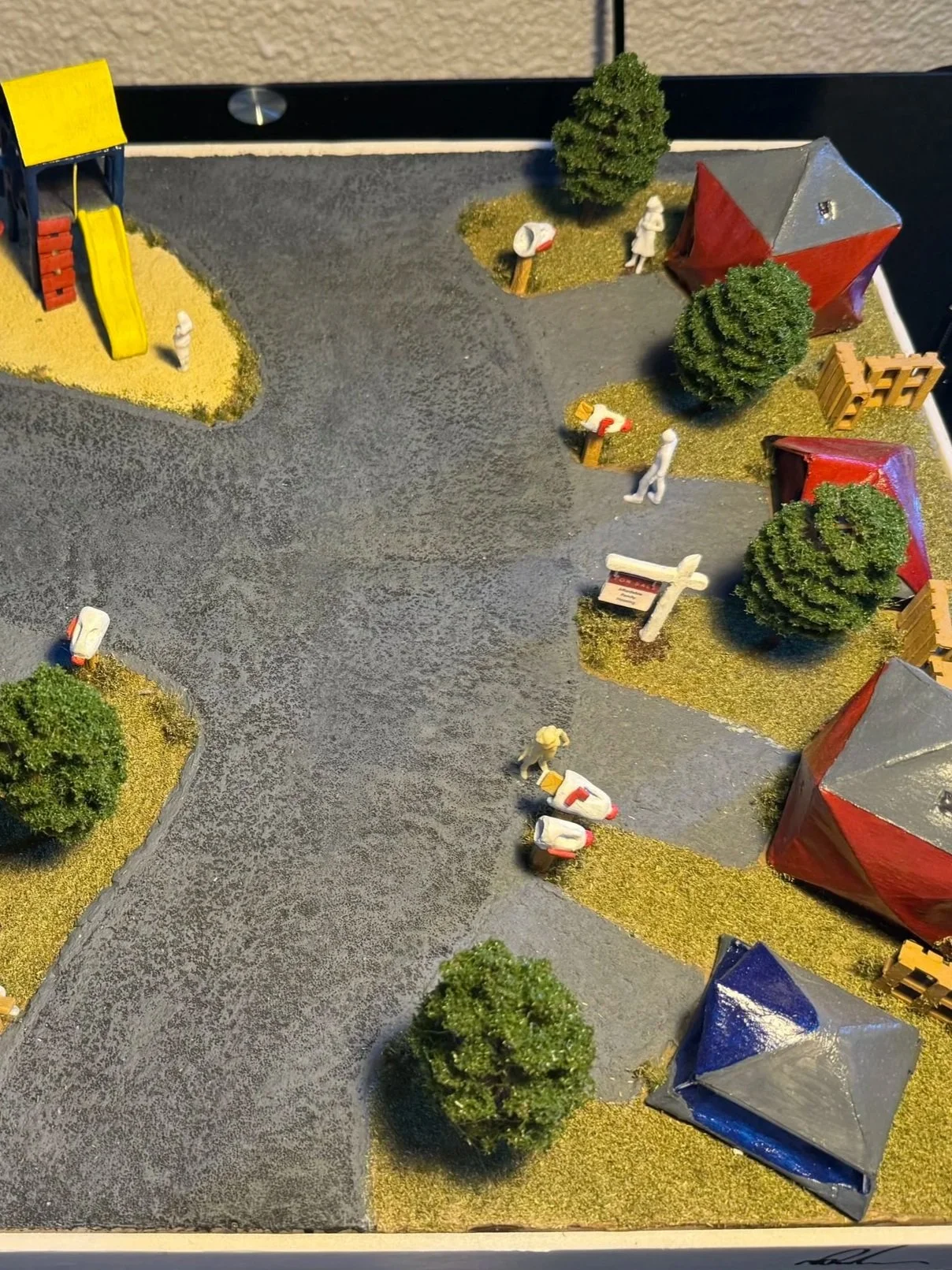
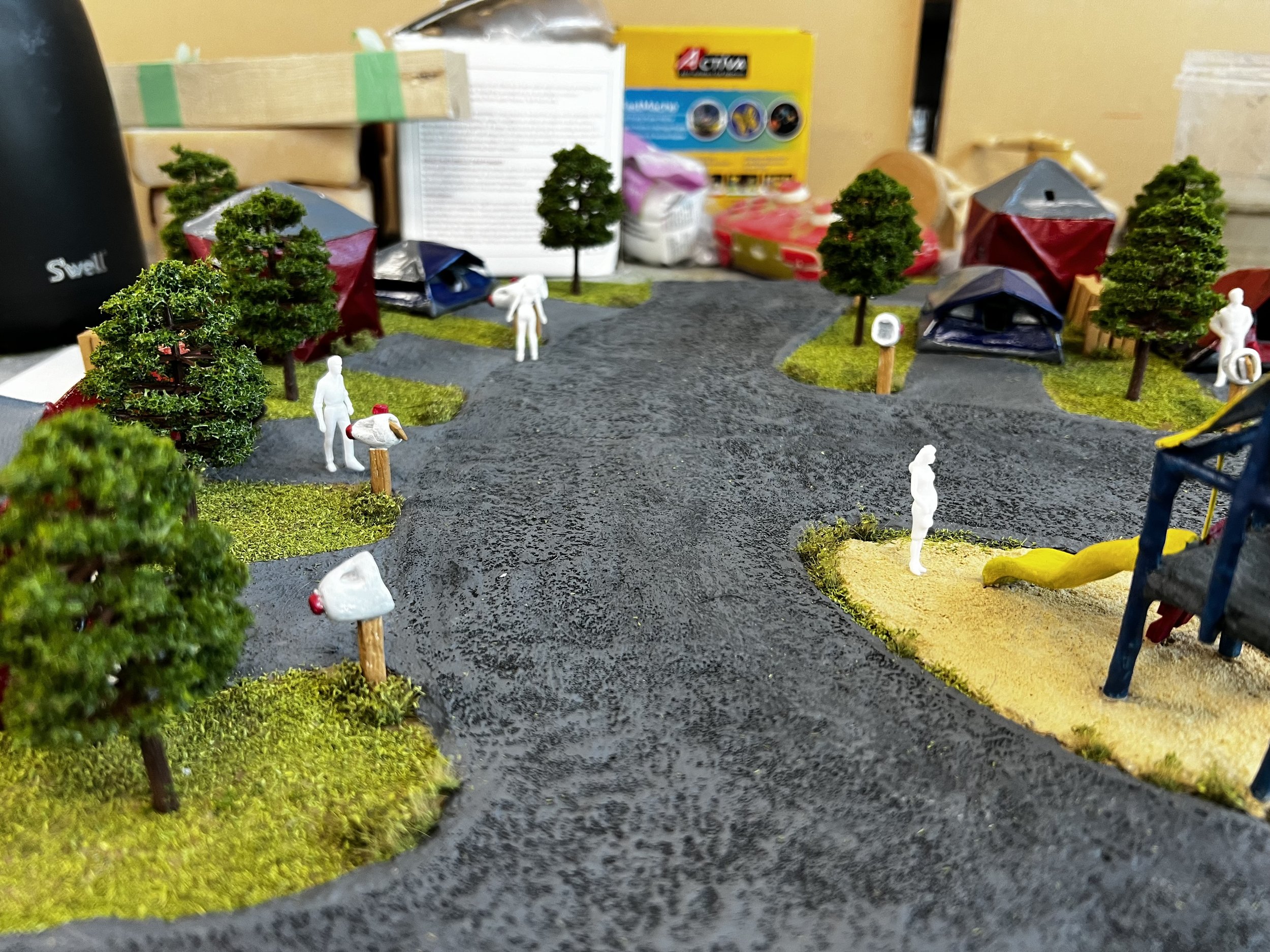
This miniature model hauntingly represents the deeply unsettling and increasingly severe housing crisis, blurring the once-clear lines between what constitutes housing and what is merely a form of shelter. The artist's meticulously crafted suburban scene boldly replaces traditional homes with a series of camping tents, This thought-provoking piece serves as a powerful social commentary and stark warning about the insidious nature of capitalist exploitation. It’s a crucial wake-up call, drawing attention to the fragile and precarious future of housing in our communities.
This miniature model presents a haunting yet insightful representation of the escalating housing crisis, embodying a future where the line between housing and mere shelter has blurred. The artist has crafted a suburban scene, but instead of traditional homes, camping tents replace what would typically be family houses. This satirical yet dystopian portrayal critiques a grim reality in today’s housing market—a market where “affordable” housing no longer meets the needs of the average citizen, but rather fills the pockets of landlords and property developers.
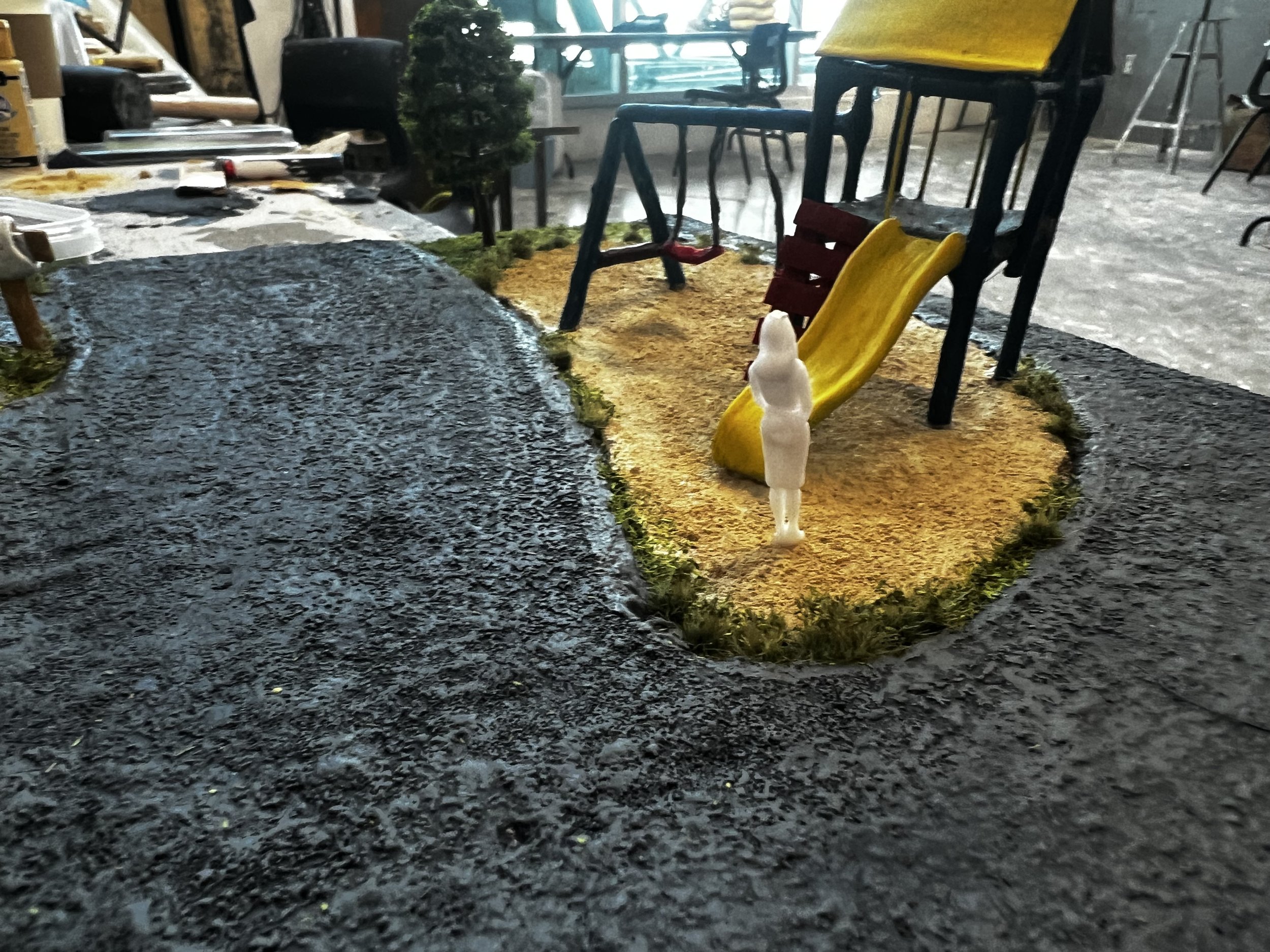
The piece is inspired by the rise of tent towns and shanty settlements, particularly in Halifax, Nova Scotia, where a growing number of people are forced to seek refuge in such makeshift communities. This unsettling reality echoes in the carefully arranged tents, fenced-in lots, and simplistic landscaping, all suggesting a society that commodifies even the most basic shelter. The artist’s message is clear: these tents are not homes; they are symbols of a society that has neglected its vulnerable, forcing them into conditions that are unlivable and unsustainable. The familiar suburban details—trees, pathways, a playground—further amplify the surreal absurdity of a world where a tent could be sold as a home.
The piece is both a social commentary and a warning, shedding light on the capitalist exploitation in the housing market. It captures the artist’s disgust at a system that leaves people behind and profits from scarcity, illustrating that homelessness and inadequate housing could happen to anyone without adequate social support. This model serves as a wake-up call to the harsh reality that, unless changes are made, the future of housing may indeed resemble these fragile and temporary shelters in a supposed “neighborhood.”